The Genius Wave Review 2026: Does theta brainwave audio actually improve creativity and focus?
The Genius Wave applies theta brainwave entrainment theory to a consumer-friendly 12-minute audio format. Theta waves have genuine research associations with creativity and relaxed focus, but whether a single audio track can reliably induce these states is less established. The low price and 90-day guarantee make it a low-risk experiment for the curious.
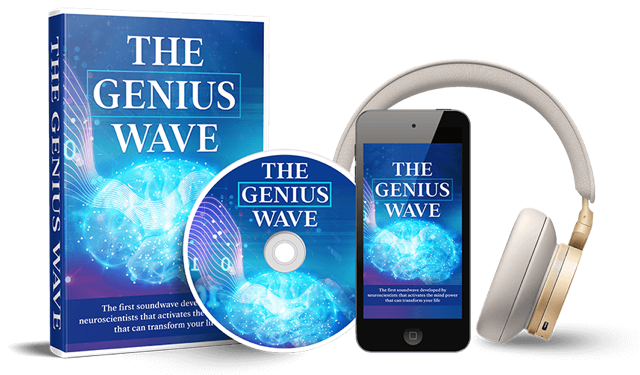
The Genius Wave applies theta brainwave entrainment theory to a consumer-friendly 12-minute audio format. Theta waves have genuine research associations with creativity and relaxed focus, but whether a single audio track can reliably induce these states is less established. The low price and 90-day guarantee make it a low-risk experiment for the curious.
Price range: $39 (one-time payment)
The Promise: Unlock Creative Flow on Demand
Theta brainwaves have a mystique in popular neuroscience. They’re associated with creativity, deep intuition, and that elusive state of “flow”—where ideas come easily and your creative work feels effortless. The Genius Wave promises to guide your brain into theta activity through 12 minutes of specially engineered audio, unlocking mental clarity, enhanced memory, and creative thinking.
Compared to the typical nootropic supplement market, the appeal is obvious: no pills, no lab-created compounds, just audio frequencies designed to harmonize with your brain’s natural rhythms. But can a 12-minute digital audio file actually shift your brainwaves toward the theta state? And if it does, will that actually improve your creativity?
Let’s investigate.
What Are Theta Waves, and What Does the Research Say?
Theta brainwaves operate at 4–7 Hz—a slower frequency than the “normal” waking state (beta waves at 13–30 Hz). Theta activity is naturally prominent in several states:
- Meditation and deep relaxation: Experienced meditators show increased theta activity.
- REM sleep: Theta waves dominate during the dreaming phase of sleep, which is crucial for memory consolidation and creative thinking.
- Light sleep and hypnagogic states: The drowsy state between wakefulness and sleep is rich in theta activity.
- Deep focus on intuitive or creative tasks: Some research suggests theta increases when people engage in creative problem-solving or artistic work.
The association between theta waves and creativity has intuitive appeal. Creative breakthroughs often feel dreamlike. Meditation practitioners report enhanced creativity. Sleep is essential for memory consolidation and idea integration. Theta waves are involved in all of these processes.
So yes, there’s a legitimate connection between theta brainwave activity and creativity.
The research supporting this is substantial but nuanced. A 2012 study in NeuroImage found that people engaged in creative idea generation showed increased theta activity in specific brain regions. Research on meditation shows that experienced meditators display elevated theta waves and report enhanced creativity and problem-solving. Studies on sleep demonstrate that theta wave activity during sleep is critical for memory consolidation and the formation of creative associations.
But here’s the critical caveat: Most of this research involves naturally occurring theta waves during sleep, meditation, or creative flow states. It’s different from asking: “Can audio frequencies induce theta waves in a waking person who’s listening to a recording?”
The answer is: maybe, but the evidence is less robust than the marketing might suggest.
Brainwave Entrainment: The Promise and the Reality
Brainwave entrainment works through a principle called “frequency following response.” The theory is that when your brain is exposed to rhythmic stimulation (audio, visual, or tactile) at a specific frequency, it naturally synchronizes with that frequency.
In controlled laboratory settings, binaural beats (a type of brainwave entrainment using slightly different frequencies in each ear) have shown effects on brainwave activity. A 2019 review in Frontiers in Human Neuroscience found that binaural beat stimulation could influence brain activity and mood, with moderate effect sizes.
However—and this is important—most studies on brainwave entrainment are small, conducted with EEG monitoring in quiet laboratory environments, often with highly attentive participants. Real-world application is messier. Your brain’s response to entrainment depends on:
- Attention level: If you’re listening passively while working or scrolling, entrainment is less likely.
- Baseline brain state: A highly stressed or distracted mind may not synchronize as easily.
- Individual differences: Some people’s brains are naturally more responsive to rhythmic stimulation; others are not.
- Audio quality: Poorly engineered audio may be less effective.
- Listening environment: Distractions and noise reduce entrainment potential.
In short: brainwave entrainment is a real phenomenon, but it’s not guaranteed, especially in uncontrolled home environments.
What Makes The Genius Wave Different?
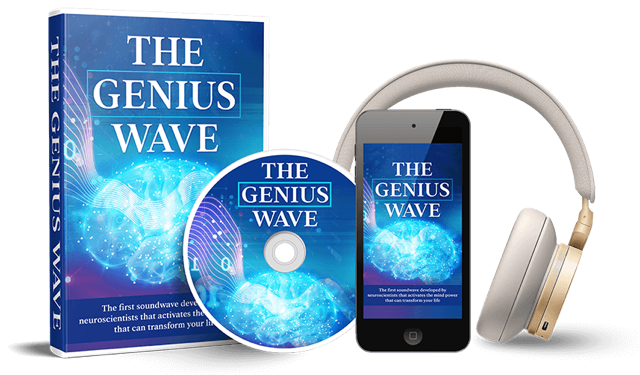
The Genius Wave positions itself specifically around theta brainwave entrainment. The marketing emphasizes:
- Guiding the brain toward theta activity using “safe, non-invasive sound frequencies”
- Enhancing mental clarity, memory recall, and creative thinking
- A simple 12-minute daily audio ritual
- Instant digital delivery with a 90-day money-back guarantee
The product provides no peer-reviewed clinical trials on the audio track itself. Like most consumer audio products in this space, they reference the general research on theta waves and creativity without product-specific evidence.
One transparency note: the product includes a disclaimer that user testimonials may use digital avatars. This is a minor red flag suggesting testimonials may not be authentic first-person accounts, which is common in digital product marketing but worth noting.
The Differentiation Question: Theta vs. Gamma
If you’re comparing The Genius Wave (theta) to similar products like The Brain Song (gamma), the question becomes: which brainwave frequency is better for your goals?
- Gamma waves (The Brain Song): Associated with intense focus, rapid learning, sharp analytical thinking. Best for: deep work, studying, problem-solving requiring sharp attention.
- Theta waves (The Genius Wave): Associated with relaxed alertness, creative insight, intuition, memory consolidation. Best for: creative work, brainstorming, relaxed problem-solving, meditation.
If your goal is laser-focused productivity on a single task, gamma entrainment might be more appropriate. If your goal is creative thinking, free-flowing ideas, or a state of relaxed mental clarity, theta entrainment aligns better with your objective.
This is a meaningful distinction. You’re not choosing between “works” and “doesn’t work”—you’re choosing the brainwave frequency that best matches your desired mental state.


Who Should Try The Genius Wave?
Ideal candidates:
- Creative professionals (writers, designers, musicians, entrepreneurs) seeking enhanced creativity
- People interested in meditation or deep relaxation
- Anyone curious about brainwave entrainment with a low financial risk
- Students wanting to optimize memory and learning
- Those seeking a natural alternative to stimulant-based focus tools
Less ideal:
- People expecting clinical-grade cognitive enhancement
- Skeptics unwilling to try something without robust product-specific studies
- Anyone unable to commit to a daily 12-minute routine
- Those with diagnosed neurological conditions (consult a doctor first)
- People looking for immediate, dramatic cognitive transformation
The Real Value Proposition
Here’s where The Genius Wave makes financial sense: if you wanted to pursue theta brainwave optimization through traditional channels, you’d spend significantly more:
- Neurofeedback training: $5,000–$15,000 for a full course
- Meditation retreats: $500–$3,000+ for intensive training
- Cognitive enhancement supplements: $50–$150+ monthly
- Professional audio engineering for binaural beats: Custom pricing, easily $500+
At $39 with zero side effects and a 90-day refund guarantee, The Genius Wave is an accessible entry point to theta brainwave optimization. The downside risk is minimal: if you don’t experience benefits, you get a refund.
What Realistic User Experience Looks Like
If you purchase The Genius Wave, here’s what an honest daily experience probably involves:
First listen: The audio is pleasant, often with ambient sounds and binaural frequencies. You might notice a subtle shift in mood or mental state. Some users feel noticeably more relaxed; others feel nothing obvious. Both are normal.
First week: As you develop the habit, some users report noticing enhanced relaxation, a quieter mind, or a slight boost in creative thinking during the day. The effect is typically subtle—not like taking a stimulant. Others notice no changes. Individual variability is high.
Weeks 2–4: If benefits are going to emerge, they typically do so in this window. Users often describe a sense of mental clarity, easier access to creative ideas, or a more relaxed approach to problem-solving. The subjective feeling is often described as “fresher thinking” or “easier idea generation.”
Beyond: Consistent users tend to report that the benefits stabilize and become part of their daily mental baseline. It’s not transformative; it’s more like a subtle daily optimization.
Critical Limitations
-
No product-specific clinical evidence. The company hasn’t published studies on this specific audio product. You’re relying on general research about theta waves and brainwave entrainment.
-
Individual response varies widely. Some brains synchronize easily with entrainment stimuli; others don’t. There’s no way to predict your personal response in advance.
-
Testimonials aren’t authenticated. The disclaimer about digital avatars means user stories may not be genuine first-person accounts.
-
Methodology is proprietary. You don’t know the specific frequencies, binaural beat offset, or audio engineering choices. This limits your ability to evaluate whether the methodology aligns with research-supported approaches.
-
It’s not a substitute for foundational health. Brainwave entrainment is an optimization layer, not a foundation. If your sleep is poor, your stress is chronic, and you never exercise, a 12-minute audio track won’t dramatically improve your creativity.
-
Effects are subtle, not dramatic. Brainwave entrainment isn’t like taking a stimulant. The improvements, if they occur, are typically incremental: slightly clearer thinking, slightly easier access to ideas. Not revolutionary.
The Bottom Line
The Genius Wave applies legitimate neuroscience—theta waves are genuinely associated with creativity and relaxed focus—to an affordable, accessible package. Whether this specific 12-minute audio track will reliably shift your brainwaves into theta states and measurably improve your creative thinking is where things get uncertain.
At $39 with a 90-day guarantee and zero side effects, it’s a low-financial-risk, low-commitment experiment. If you’re a creative professional, a curious meditator, or someone interested in cognitive optimization, it’s worth trying.
If it works for you, incorporate it into your daily routine. If you don’t notice meaningful benefits after 4–6 weeks, use the 90-day guarantee to get your money back.
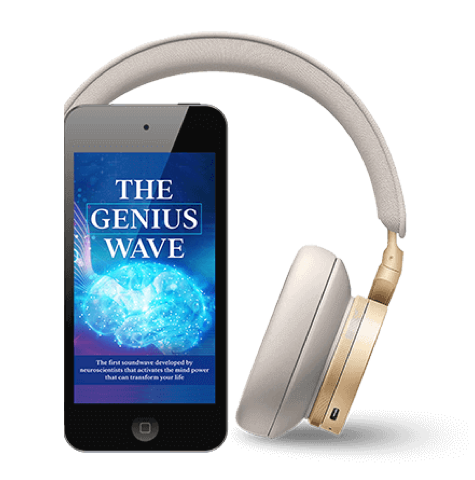

Think of it not as a proven creative enhancement tool, but as an inexpensive, low-friction experiment in theta brainwave optimization. That’s the honest assessment, and it’s also the case that makes it worth trying.
Pros
- Affordable at $39 with 90-day money-back guarantee
- Theta brainwave research has decades of neuroscience investigation behind it
- Non-invasive, zero side effects compared to nootropic supplements
- Simple 12-minute daily routine with instant access
Cons
- No clinical trials conducted on this specific audio product
- Theta wave benefits in controlled settings may not translate to a consumer audio track
- Testimonials may use digital avatars per disclaimer
- Exact audio engineering methodology not disclosed
Try The Genius Wave Risk-Free
The Genius Wave applies theta brainwave entrainment theory to a consumer-friendly 12-minute audio format. Theta waves have genuine research associations with creativity and relaxed focus, but whether a single audio track can reliably induce these states is less established. The low price and 90-day guarantee make it a low-risk experiment for the curious.
Get The Genius Wave Now Individual results may vary. See full disclaimer below.